
Top 10 AI Tools Every Computer Science Student Should Learn in 2026
AI has officially taken over software engineering workflows. Today, software engineers aren’t writing huge code blocks for the basic stuff. The basic programming files are being generated with AI, with professional programmers focusing solely on reviewing and debugging. Not only this, but AI tools have completely transformed how developers build, deploy, and maintain applications. In this respect, AI tools for software engineers are not just an add-on, but a necessity for efficiency. In this blog, we’ll discuss ten such tools that computer science students should be on the lookout for in 2026.
Top 10 AI Tools for Computer Science Students
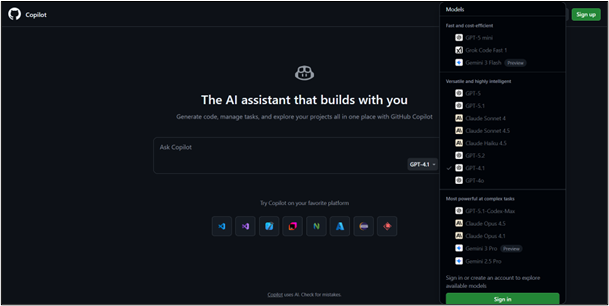
1. GitHub Copilot
As a programmer, GitHub is definitely your second home. GitHub’s Copilot is among those AI tools for coding that can be directly integrated into VS Code, where it suggests code in real time as you type. It is beneficial because it can be integrated into GitHub and VS, where most coders are working. Additionally, it reduces repetitive tasks and writes foundational code itself for you.
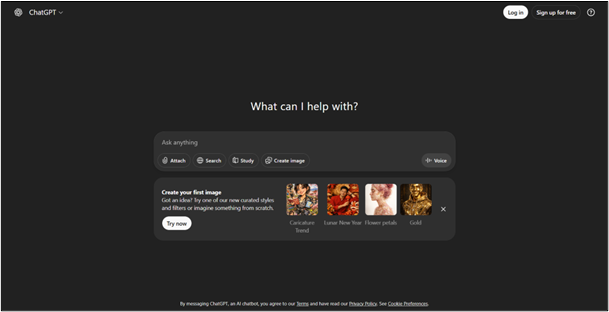
2. ChatGPT and AI Coding Assistants
ChatGPT is arguably the most popular chatbot in the world right now. For the simplest, professionals can use tools like ChatGPT, Claude, Perplexity, etc., for explanations, understanding, and debugging complex code. What makes such tools an obvious choice is that they are among the most accessible, easy-to-use, and free AI tools for students in the market.
3. Tabnine
Tabnine is a smart AI tool that understands the context of your code, unlike most AI tools for developers. It understands your coding intention and accordingly suggests code that should follow. It helps in typing code faster and reduces errors to almost zero across multiple programming languages. It is surely one of the best tools for significantly enhancing coding productivity.
4. TensorFlow
TenorFlow is one of the more popular machine learning (ML) frameworks. Students from B.Tech computer science engineering colleges in UP, for instance, can use it for building personalized AI models. Moreover, it can be used to leverage data analysis capabilities and run deep learning experiments. TensorFlow is actually used in real-world AI development and provides students with a genuine, practical experience.
5. PyTorch
PyTorch is one of the most popular AI tools for research and deep learning. Since the tool is associated with Python, the community support is immensely strong, and it is widely used for innovations in the AI field. As a student, if you’re interested in AI and its scope, you should definitely play around with PyTorch for advanced research coverage.
6. AutoML Tools
AutoML is what it literally stands for: automated machine learning. It is among those AI tools for automation that can be used to build machine learning models with fewer manual technicalities and faster development. It smoothens the ML workflow and makes entry to AI development easier. Examples of such tools include Google AutoML and H2O AI.
7. AI-Powered Testing Tools
Testing is one of those tasks that programmers find themselves burdened with. The Selenium + AI extension is a combo that handles testing on its own. It handles scenario generation, detects UI changes, and runs tests independently. It eliminates manual effort and is a comparatively easy-to-acquire practical skill.
8. Docker with AI Optimization
While the exact definition of Docker goes into deep technicalities, its basic use is to package applications into containers and test them virtually. With the new AI optimization, Docker can further improve deployment efficiency, optimize resource usage, and simplify DevOps workflows. The development and operations cycle gets even shorter and stronger.
9. Hugging Face
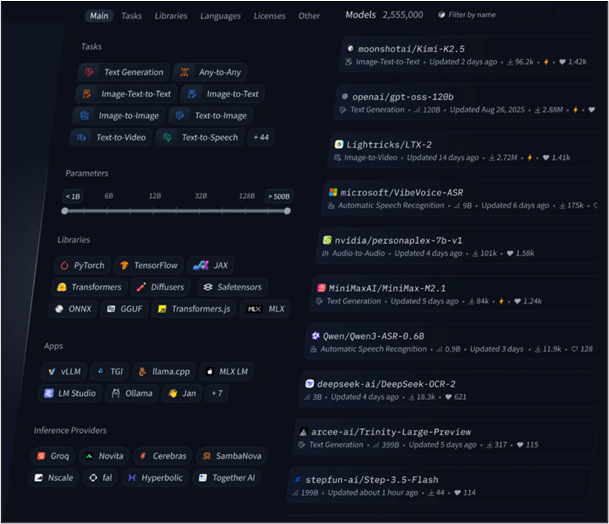
Think of Hugging Face as a hoarder of pre-trained AI models, trained over NLP models to test and experiment with various AI models. Enthusiasts can understand the workflow of an AI model using Hugging Face and explore AI development in detail. Currently, it is among the most trending technologies in computer science.
10. Notion AI & Productivity Tools
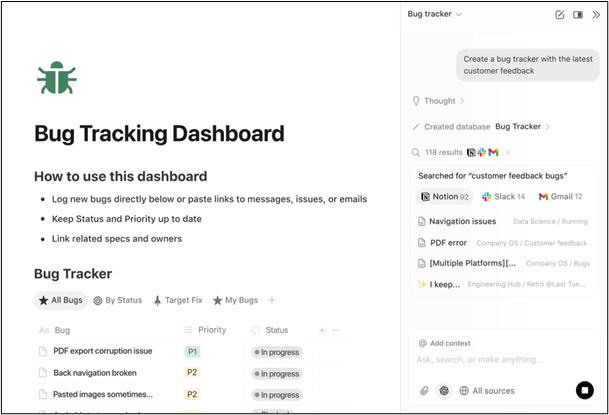
While not directly related to coding or related fields, productivity tools with AI-enabled interfaces can be used to organize workflows and make projects more achievable. One of the most popular examples of such a tool is Notion AI, which companies use to organize code and projects and improve overall efficiency.
Conclusion
Artificial intelligence can’t be neglected in modern workflows. The better approach is to adapt to it and build AI tool awareness from the start in traditional computer science courses. Efficiency can be enhanced exponentially, enabling students to build faster, learn smarter, and adapt to industry demands.
Colleges have already begun taking action on this, and they are updating their curricula to integrate practical AI knowledge. For instance, Shobhit University, the best university in UP, is integrating AI tools in students’ learning journey to bridge the gap between academic knowledge and real-world development practices. They have been successful in doing so, and students are not just learning to code well but also to collaborate effectively with AI.
