
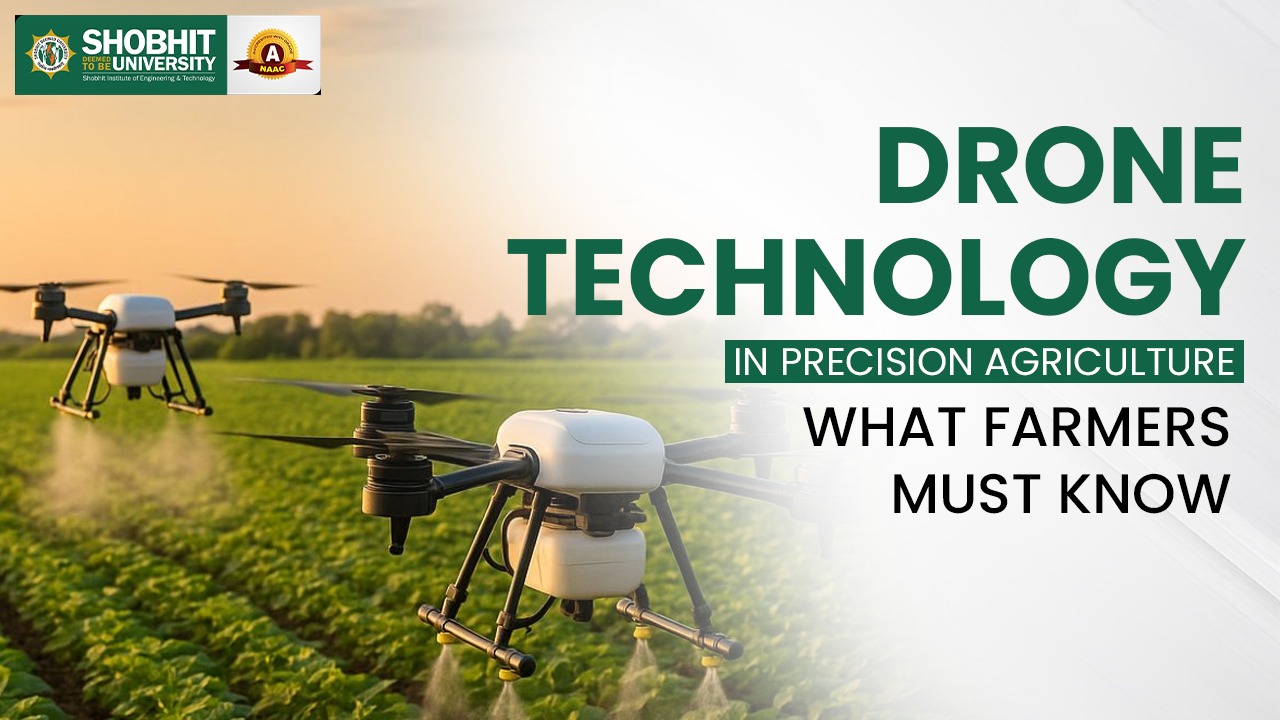
Drone Technology in Precision Agriculture: What Farmers Must Know
Agriculture is no longer as traditional as it used to be. It has undergone a technological transformation, and precision-based technology systems are replacing intuition-based practices. Among these modern agricultural revolutions, the most interesting in recent years is drone technology in agriculture.
Drones can take over most agricultural tasks, from field monitoring to precision spraying. As precision agriculture technology continues to grow, drones will be the next big thing in farming. Today’s blog will be a guide for farmers and students interested in agriculture on drones and how precision agriculture will change how farming is done.
What Is Precision Agriculture?
Formerly, farmers had their own rules of thumb for farming activities, such as irrigation and the distribution of agricultural inputs. But precision technology understands the needs of crops and fields and provides inputs accordingly. What this means is that precision technology ditches uniform-field treatment and focuses on site-specific crop management. It aims to improve the overall efficiency of land based on segmented data, where precision agriculture drones play a crucial role.
Understanding Drone Technology in Agriculture
Agricultural drones, also known as unmanned aerial vehicles (UAVs), use specialised cameras, sensors, GPS systems, and imaging tools to collect real-time farm data for field analysis, automated spraying, and aerial imagery. Three types of drones are used for this purpose:
- Fixed-Wing Drones: These drones are ideal for large, extensive agricultural areas, providing complete coverage over long periods.
- Multi-Rotor Drones: These drones offer greater maneuverability and are well-suited for targeted spraying. Small and medium farms can benefit immensely from them.
- Hybrid Drones: Combine the speciality of both the drones and put them into one—that’s hybrid drones for you. Farms with a large area and advanced precision setups can deploy hybrid drones for specialised applications.
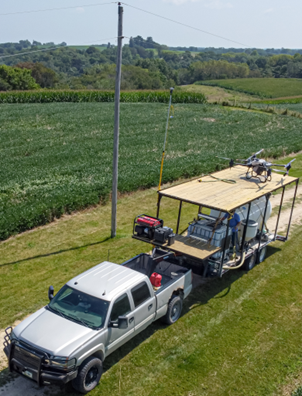
Applications of Precision Agriculture Drones
- Crop Health Monitoring: Drones are equipped with specialised sensors that capture multispectral and thermal imagery to detect deficiencies, diseases, or other compromises. It helps in early detection so farmers can take precautionary measures.
- Precision Spraying: Large, advanced drones (with precision farming technology) can also help spray pesticides, fertilisers, and herbicides. They can perform targeted spraying in calculated areas, reducing chemical use, lowering labour costs, and achieving actual uniformity.
- Field Mapping & Surveying: Drones can generate 3D maps of fields. This could also be used to analyse soil health, determine crop growth stages, and prepare land based on topographic differences.
- Irrigation Management: With complete field information, including dry patches and uneven water distribution, water requirements can be calculated, and the land irrigated accordingly. The water-use efficiency improves, placing it among sustainable farming practices.
- Yield Prediction & Data Analysis: Drone is a smart farming technology that can collect field data and generate yield, growth, and farm-planning predictions. It reduces the long-lasting uncertainty in agriculture and improves decision-making.
Benefits of Drones in Agriculture
The benefits of drones in agriculture are beyond just convenience. They include:
- Reduced input costs
- Improved crop yield
- Faster field inspection
- Better resource optimization
- Reduced environmental impact
- Enhanced decision-making accuracy
Challenges & Limitations
Implementing drones is not as easy as it looks. Here are the challenges farmers face:
- High initial investment cost
- Need for technical training
- Battery life constraints
- Weather dependency
- Regulatory permissions in certain regions
However, these challenges are being addressed across academic and research areas of agricultural drones. For example, BTech agricultural engineering has amended its curriculum to provide the necessary attention to these challenges.
Conclusion
Drone technology isn’t just an experimental innovation. It can be adopted in modern farming fields for data collection and analysis to support redefined agricultural operations. Precision agriculture and drone use will grow in parallel, taking farming from guesswork to a data-guided practice.
If you are interested in agriculture, you should keep an eye out for drone technology. Shobhit University, the best university in Meerut, for instance, is aligning its curriculum with emerging agricultural technologies to ensure students are ready for a rapidly evolving farming landscape.
